
Lead acid is the lower upfront cost option, with a heavier and bulkier battery that is usually fixed in place. Lithium ion costs more upfront, but it is lighter, generally lasts more charge cycles and is easier to remove and charge indoors. For a short daily commute on flat city roads, where the scooter can be charged easily where it is parked, lead acid can make sense. For longer daily distances, charging upstairs in a flat, or keeping the scooter for many years, lithium usually works out better.
The honest answer is that it depends on your daily distance, where you park and charge, and how long you plan to keep the scooter. This guide breaks those three things down for a Kolkata buyer, and shows which E-Miles models let you pick either chemistry.
Lead acid batteries: what you actually get
Lead acid is the older, simpler technology, and that simplicity is the whole point. It keeps the entry price of the scooter down, so it is the option that gets you onto an electric two-wheeler for the least money upfront. That lower price is real, not a marketing trick.
What you pay for that saving is weight and bulk. A lead acid pack is heavy and takes up more space, which usually means it stays bolted into the scooter rather than coming out with you. Charging therefore has to happen where the scooter is parked.
Lead acid also rewards good charging habits more strictly. It does not like being left discharged for long periods, and frequent deep drain is harder on it than on lithium. If you are someone who plugs in every night and never lets the pack sit empty for weeks, you will get much more out of a lead acid battery than someone who charges it casually. Expect to replace it sooner than a lithium pack — that is the trade you made for the lower upfront price.
Where lead acid is the wrong choice: you live upstairs with no ground-floor parking and no socket near the scooter, you ride long distances most days, or you plan to keep the vehicle for many years. In those cases the cheap upfront price usually stops looking cheap.
Lithium-ion batteries: what you actually get
Lithium ion is lighter for the same amount of stored energy, and that single difference changes almost everything else about how the scooter feels and how you live with it. A lighter pack makes the scooter easier to handle at low speed, easier to push, and easier to balance when you are stopped in traffic.
Lithium packs generally tolerate more charge cycles before they need replacing, and in many setups the pack is designed to be removed. That means you can carry it inside and charge it at a normal socket in your flat, which is often the deciding factor for anyone without ground-floor parking.
The cost of all this is a higher upfront price. If you only ride a short distance each day and the scooter sits where it can be charged easily, that extra spend may not pay you back in any way you will notice. Lithium is not automatically the better buy — it is the better buy for a particular kind of use.
Where lithium is not worth the extra spend: very short daily runs, easy ground-floor charging, and a scooter you may not keep long enough to benefit from the longer pack life.
What changes in day-to-day use
Weight and handling
Battery weight sits low and central in the scooter, so a heavier pack raises the effort needed to push the vehicle, park it in a tight spot, or pull it onto a stand. It is not a performance problem while riding — it is a problem at walking pace, in a crowded parking area, or on a slope outside your gate. If you are a lighter rider, or you regularly move the scooter by hand, this is the difference you will feel first, well before you notice anything about range.
Charging where you park
This is the single most practical question, and it has nothing to do with specifications. Ground-floor parking with a socket nearby: a fixed battery is no inconvenience at all. Upstairs flat with the scooter parked on the road or in a community parking area: a removable pack is the difference between a workable routine and a daily hassle. Be honest with yourself about this before you compare prices, because a cheap battery you cannot conveniently charge is not cheap.
How long the battery lasts and replacement
A battery is a consumable — it will need replacing eventually whichever chemistry you choose. Lithium generally gives you more charge cycles before that point, and lead acid asks for more careful habits to reach its own lifespan. If you plan to keep the scooter for many years, add the cost of a replacement pack to the upfront price when you compare, rather than looking at the showroom price alone.
Upfront price vs total cost of ownership
Compare on the total, not the sticker. For lead acid: lower purchase price, heavier vehicle, more careful charging, replacement sooner. For lithium: higher purchase price, lighter vehicle, more cycles, easier indoor charging. Which column wins depends on how long you keep the scooter and how convenient charging is for you — not on which battery is technically newer.
Which E-Miles models let you choose
Four models in the E-Miles range are listed on this site as compatible with both lead acid and lithium ion batteries. You are not locked into one chemistry by choosing a model — the choice is yours at the point of purchase, subject to what is available at the showroom for that model. Here is what each one offers.
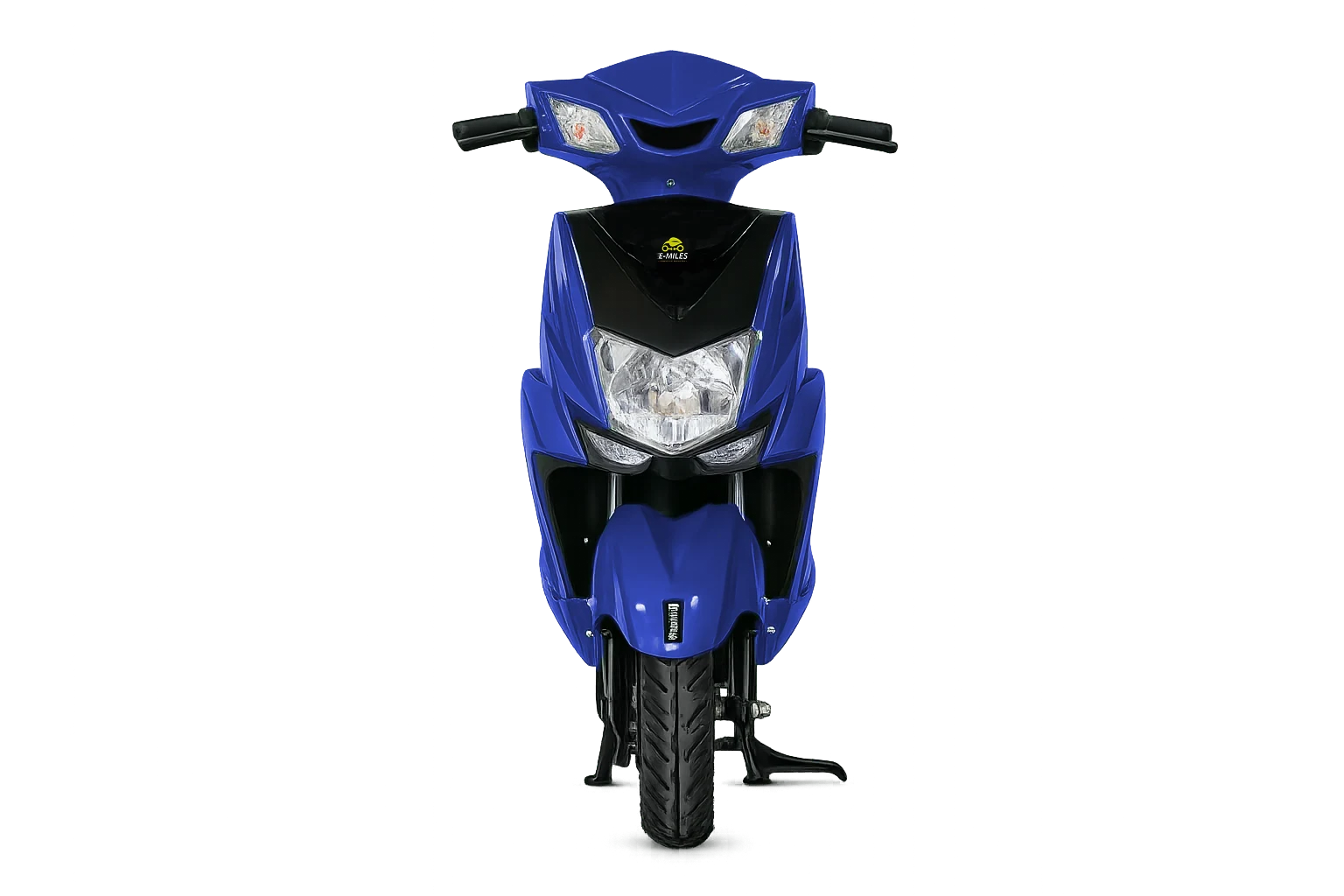
E-Alfa Eco
₹45,000/- Onwards- 850W motor, 3 Different modes
- 65-75km range, wheel base (12/10) (12/12) (10/12) customizable
- Lead acid battery / Lithium ion battery (compatible)
- Disc(F) / Drum(R) brakes
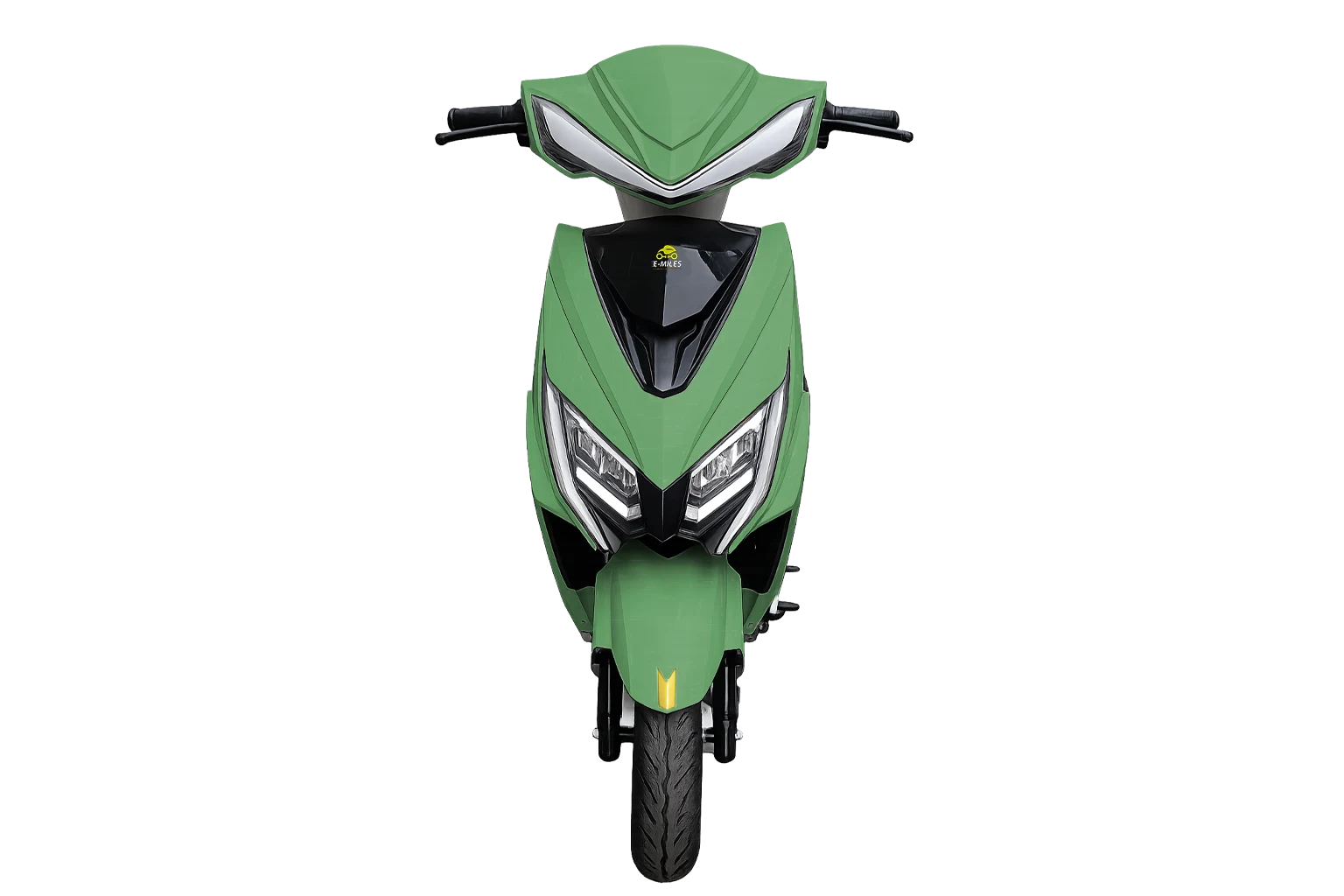
E-Nozzel
₹48,000/- Onwards- 1000W motor, 3 speed mode
- 65-75km range, wheel base (12/12) (10/10) customizable
- Lithium ion / lead acid (compatible)
- Disc(F) / Drum(R) brakes
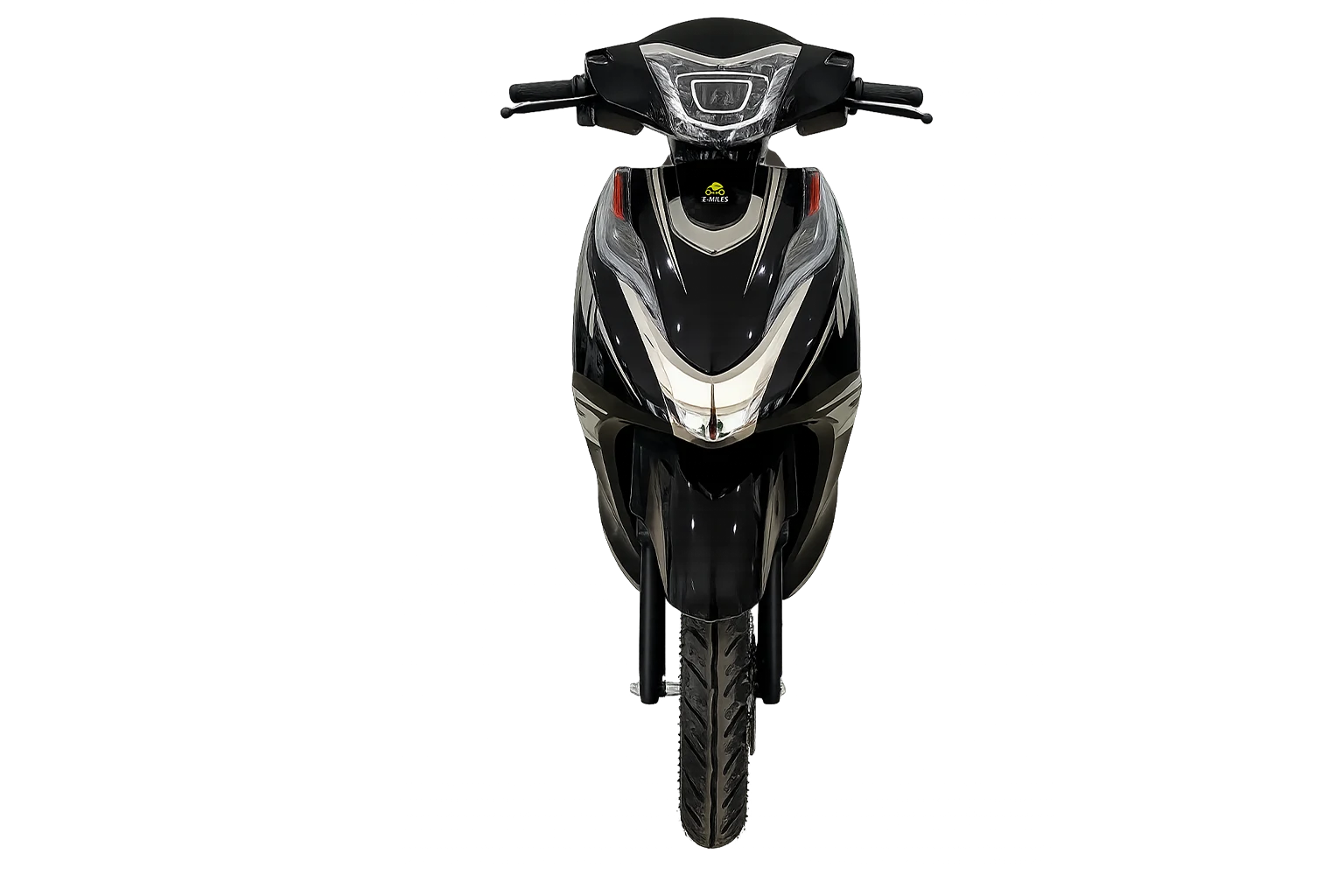
Power Booster
₹58,000/- Onwards- 1500W motor, 3 Speed Modes
- 55-60KM range, wheel base (12/12)
- Lead acid battery / Lithium ion battery (compatible)
- Disc(F) / Drum(R) brakes
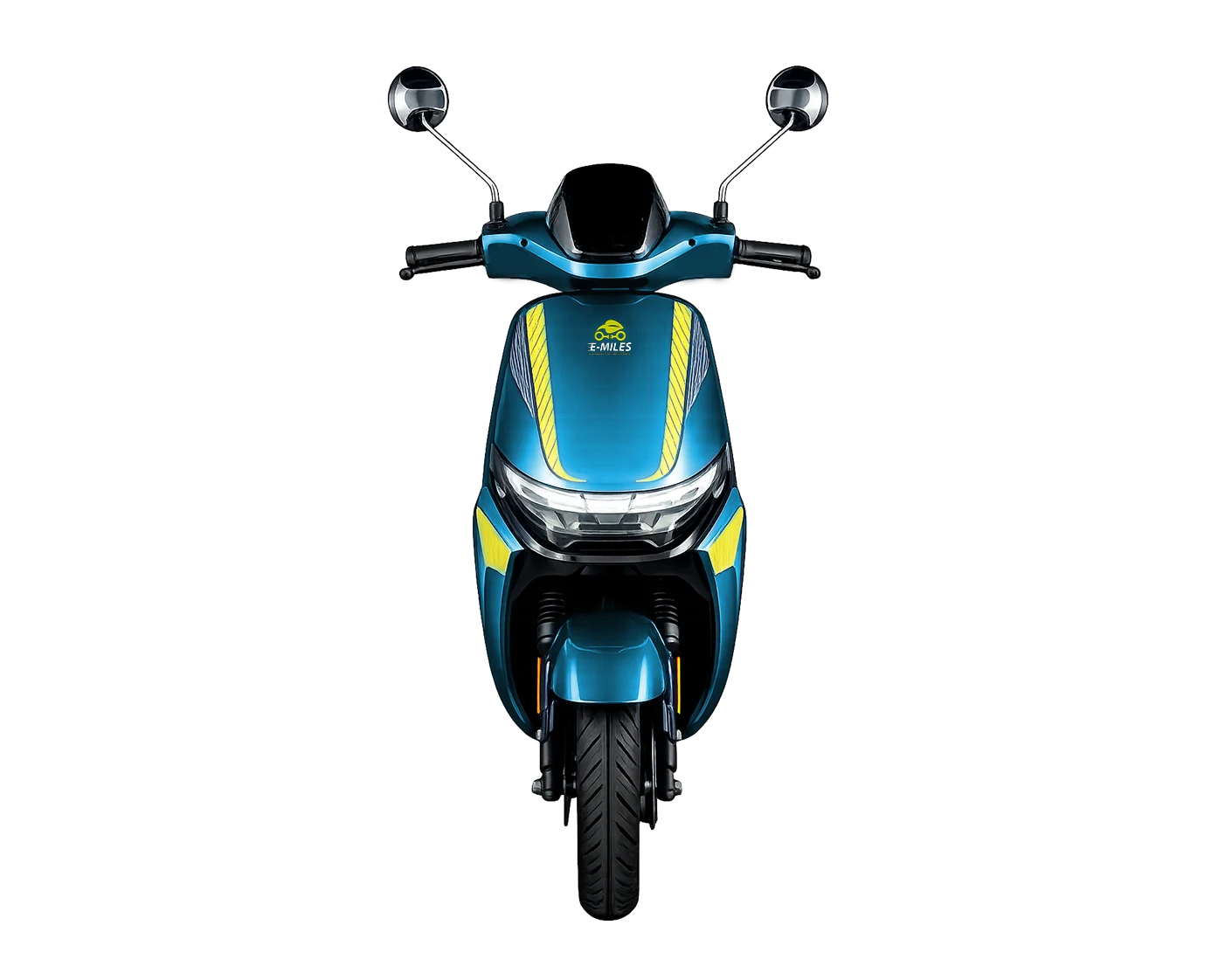
E-Vibe
₹59,000/- Onwards- 1200W motor, 3 Different modes
- 65-75km range, wheel base (12/10) (12/12) (10/12)
- Lead acid battery / Lithium ion battery (customizable)
- Disc(F) / Drum(R) brakes
The range figure shown for each model is the figure E-Miles publishes for that model. Actual range depends on load, terrain, the riding mode you use and the condition of the battery — so treat it as a reference point for comparison rather than a guaranteed number. See the full range of electric two-wheelers on the product gallery.
How to decide before you buy in Kolkata
Work through this before you walk into a showroom, because these are the answers that actually decide it — not the brochure.
- Typical daily distance. Add up your real weekday running, not your longest trip. Short, consistent runs favour lead acid; long daily distances favour lithium.
- Can you charge at ground level? If the scooter is parked next to a socket, a fixed battery is fine. If not, you need a pack you can carry.
- Do you need to carry the battery inside? Upstairs flats, shared parking and street parking all point towards a removable lithium pack.
- How hilly is your route? Gradients and frequent stops put more demand on the vehicle and on the pack. Ride your actual route on a test ride rather than a flat loop around the showroom.
- How long will you keep the scooter? A short ownership period makes the lower upfront price more attractive; a long one makes the longer-life pack more attractive.
- Do you want the lowest entry price? If budget today is the binding constraint, lead acid is a legitimate choice — just go in knowing the trade-offs.
Then ask the showroom these questions directly:
- Which battery is fitted on this model at the price you have quoted me?
- What does the quoted range refer to, and which battery was it measured with?
- Is the battery removable on this model, and can it be charged indoors?
- If I later want to change to the other battery type, what else has to be changed with it?
Those four answers will settle the decision faster than any comparison table.
Try both at the Dum Dum showroom
The weight difference between lead acid and lithium is something you understand in about thirty seconds of pushing a scooter around a showroom floor — far quicker than reading about it. Visit the E-Miles showroom in Dum Dum, sit on the models, and book a test ride on the one you are considering.
First Floor, Sailen Das Sarani Rd, opposite Post Office, Mahendra Colony, Cantonment, Rajbari, Dum Dum, Kolkata, North Dumdum, West Bengal 700028
Sunday to Saturday, 10:00 AM to 7:00 PM
8981676922 / 9051243693
support.emiles@gmail.com
FAQ
Can I upgrade a lead acid scooter to lithium later?
The E-Miles models described above are listed as compatible with both battery types, so it is a fair question to ask. But compatibility at the vehicle level does not automatically mean a straight swap: the charger and the controller have to suit the battery you fit, and that has to be confirmed for the specific model. Ask the showroom before you buy if you plan to switch later, and ask them to confirm it in writing for the model you choose.
Does the battery type change the range E-Miles quotes?
The range is published per model — for example 65-75 km on the E-Alfa Eco, E-Nozzel and E-Vibe, and 55-60 km on the Power Booster. The site does not state which battery the quoted figure was measured with, so if the number matters to your commute, ask the showroom which battery option that figure refers to. In real use, range varies with load, terrain, riding mode and the condition of the battery regardless of chemistry.
Can I see and test both battery options before I buy?
That is the most useful thing you can do at the showroom, but it depends on what is in stock and what is fitted to the demo scooters on the day. Call ahead on 8981676922 or 9051243693 and tell them which model and which battery you want to experience, so they can arrange it. A test ride is where the weight difference between the two chemistries actually becomes obvious.